




For more than a decade, search engine optimization has been the backbone of digital visibility. Businesses invested heavily in ranking on Google because that was where customers discovered services, products, and information.
But search is changing faster than most people realize.
Artificial intelligence powered search platforms like ChatGPT, Google AI Overviews, Gemini, Perplexity, and Microsoft Copilot are transforming how people find answers online. Instead of scrolling through pages of links, users increasingly ask conversational questions and receive a synthesized response directly from AI.
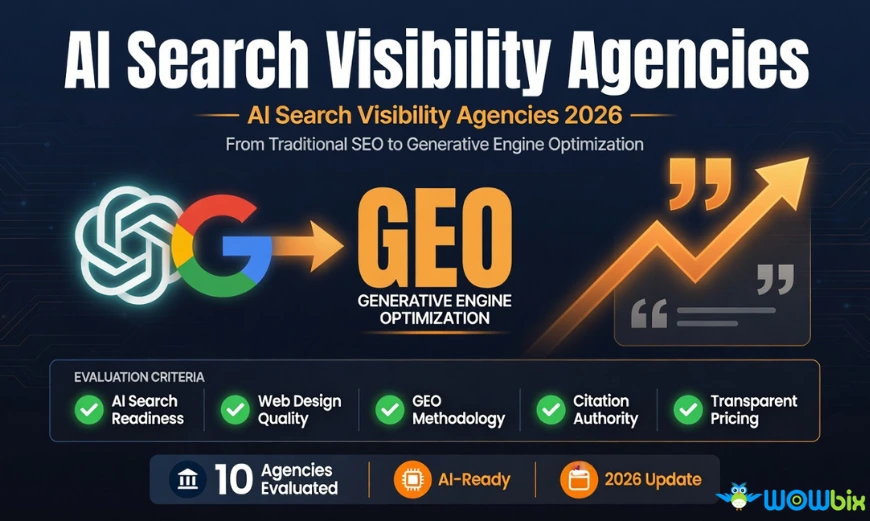
This shift is creating a new discipline called Generative Engine Optimization (GEO).
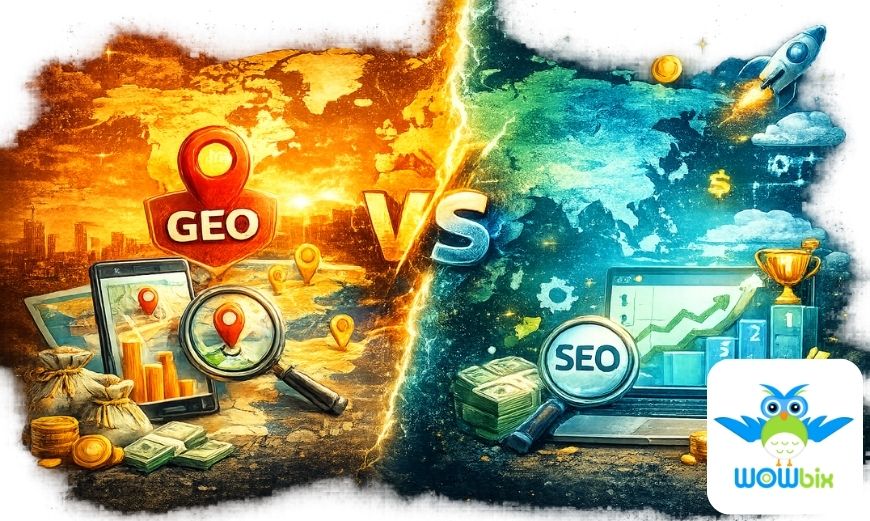
The question many marketers are asking today is simple: Is GEO replacing SEO?
The evidence shows the answer is no. GEO does not replace SEO. It expands it.
But here’s what’s more important: being number 1 on Google no longer guarantees you’ll show up when customers ask ChatGPT, Perplexity, or Gemini about your business.
The Rise of AI Search: The Numbers That Changed Everything
AI search tools have grown with stunning speed in just the past year.
ChatGPT now processes approximately 2.5 billion queries daily and reaches 883 million monthly active users. Perplexity AI grew 370% year-over-year in 2025. Google has introduced AI generated summaries directly inside search results through features known as AI Overviews, which now appear in 25.11% of all Google searches, up from just 6.49% just fourteen months earlier.
This growth represents the fastest adoption of any search platform shift in history. For perspective, mobile-first SEO took years to reach this level of ubiquity. GEO became mainstream in months.
The behavioral impact is profound. Studies show that click through rates dropped by 61% on queries where AI Overviews appear. But here’s the critical insight that most articles miss: the traffic isn’t disappearing. It’s migrating.
According to Conductor’s 2026 benchmarks analyzing 21.9 million Google searches and 100 million AI citations, AI platforms now generate roughly 1.13 billion referral visits monthly. Traditional search still dominates in raw volume, but AI search is accelerating while traditional search growth stalls.
The conversion story is even more compelling. Visitors arriving from AI search convert at 14.2% compared to Google’s 2.8%. For certain verticals like healthcare, home services, and professional services, that gap widens dramatically. Some agencies report AI visitors converting at 5x to 27x the rate of traditional organic visitors.
Fewer visits. Much higher intent. Much higher conversion.
The Core Difference: How SEO and GEO Actually Work
This is where people get confused, so let’s be precise.
How Traditional SEO Works
User types query → Google crawls billions of pages → Algorithm ranks results → User clicks link → User visits your website
The Goal: Get users to click your link on a search results page and visit your site. Learn more about our comprehensive SEO services for your business.
Success Measured By: Rankings, click-through rates, organic traffic, conversions.
Key Ranking Factors: Keywords, backlinks, page speed, E-E-A-T, technical performance, content quality.
How Generative Engine Optimization Works
User asks question → AI synthesizes answer from multiple sources → AI generates response → User reads answer → (Maybe) clicks source
The Goal: Get your content cited and mentioned inside the AI-generated answer itself.
Success Measured By: Citation frequency, brand mentions in AI responses, share of voice vs competitors, AI referral traffic.
Key Citation Factors: Content clarity, fact density, source attribution, entity optimization, brand presence across platforms, E-E-A-T. Explore our GEO services to get started.
Direct Comparison: GEO vs SEO Side-by-Side
| Factor | Traditional SEO | Generative Engine Optimization |
|---|---|---|
| Primary Platform | Google, Bing organic results | ChatGPT, Perplexity, Google AI Overviews, Gemini, Copilot |
| Competition | Compete for positions 1-10 on results page | Compete to be one of 2-5 sources cited in answer |
| User Behavior | User searches, scrolls results, clicks link | User asks question, reads synthesized answer, rarely clicks sources |
| Content Priority | Keywords, comprehensiveness, backlinks | Clarity, fact density, attribution, extractability |
| Traffic Source | Clicks from search results | Direct citations + occasional clicks from source attribution |
| Most Important Signal | Backlinks and domain authority | Brand search volume and multi-platform mentions |
| Content Structure | Long-form, keyword-optimized | Chunked into self-contained, extractable sections |
| Citation Example | Ranking #1 for “best dentist near me” | Being named in ChatGPT’s answer to “best dental practice for implants” |
| Measurement Tools | Google Search Console, Ahrefs, Semrush ranks | GA4 with UTM tracking, manual testing, GEO platforms (Geoptie, Gauge) |
| Time to Results | 3-6 months for competitive keywords | 2-4 months for initial citations in some verticals |
| Backlink Impact | Critical (40-50% of ranking factor) | Helpful but not dominant; brand mentions matter more |
Why Google AI Overviews Prove SEO Still Matters
Here’s the counterintuitive finding from research into Google AI Overviews specifically:
Writesonic analyzed over 1 million AI Overviews and found that 40.58% of citations come directly from Google’s top 10 organic search results. When you expand to top 20, that figure rises to 71%.
This means: if you’re not ranking on Google, your chances of appearing in Google’s AI Overviews are minimal.
However, the reverse is not true. Ranking #1 on Google gives you maybe 40-50% of the way to AI visibility. You still need the GEO layers.
This is what separates winning from losing in 2026. Companies that maintain strong traditional SEO while adding GEO strategies capture 60-70% of available search visibility. Companies doing SEO only are invisible in AI. Companies doing GEO without SEO lack the foundational authority that AI systems require to cite them.
Real Business Case Studies: What GEO Actually Delivers
The theory is interesting. The results are what matter.
Case Study 1: B2B SaaS Company (Unnamed, but Shared by GenOptima)
A mid-market SaaS company implemented integrated GEO + SEO strategy targeting product comparison queries.
Before: Ranked #3 for primary keyword. Minimal AI citations. No ChatGPT mentions.
After (90 days): Still #3 on Google. BUT now appearing in ChatGPT responses for 47 related queries. Brand appearing in AI Overviews for comparison queries. AI referral traffic conversion rate 6x higher than Google traffic.
Result: Despite ranking lower on Google than competitors, generated more sales qualified leads from AI sources than companies ranking #1.
Case Study 2: Healthcare Practice (Dental)
A dental practice in competitive market had strong local SEO but zero presence in ChatGPT or Perplexity.
Implementation: Content restructuring (added TL;DR sections), schema markup optimization (FAQPage + LocalBusiness), entity clarity (procedures, credentials, insurance), multi-platform presence (Reddit in dental communities, YouTube procedure videos). This is similar to what our healthcare marketing team implements.
Before: 45% of new patients came from Google local results.
After (6 months): 32% from Google (some decline due to AI Overviews), 18% from ChatGPT + Perplexity citations, 12% from brand mentions on Reddit, 10% other sources. Total lead volume increased 23% despite Google traffic decrease.
Case Study 3: Home Services (HVAC)
HVAC company in New Jersey market ranking #1 for “HVAC repair near me” but completely invisible in AI search.
Challenge: Customer asks ChatGPT “best HVAC company near me” or “why is my AC leaking” or “HVAC replacement vs repair” and the company never appeared.
Strategy: Fact-dense blog content with statistics (real repair costs, seasonal breakdowns, technical specs), guest posts on trusted home services publications, Reddit community participation answering real questions, schema markup for Service type, entity optimization for location + services. Our home services marketing team specializes in this approach.
Result: Within 4 months, appearing in ChatGPT answers for 12+ high-intent queries. AI visitors converting at 22% vs 3% for Google traffic. Now receiving 15-20% of monthly leads from AI sources.
The Practical Tactics: What You Actually Need to Do
Understanding the difference is one thing. Executing the strategy is another.
For SEO (The Foundation)
These remain essential and unchanged. Learn more about each in our complete SEO services:
- Keyword Research – Identify search terms your customers actually use
- On-Page Optimization – Title tags, headers, keyword placement, content quality
- Technical SEO – Site speed, mobile optimization, clean URL structure, XML sitemaps, Core Web Vitals
- Backlink Building – Guest posts, earned media, industry mentions
- Content Depth – Comprehensive coverage of topics, updated regularly
For GEO (The New Layer)
These are the specific tactics separating winners from everyone else. Discover how to implement them in our GEO services:
1. Content Restructuring for AI Extraction
AI systems don’t read pages the way humans do. They extract chunks of 50-150 words that must function as standalone citable units.
Example: Instead of writing “The cost of replacing an HVAC system varies widely depending on the type of unit, the size of your home, labor costs in your area, and whether you need ductwork modifications,” structure it as:
“HVAC replacement costs range from $4,000 to $15,000 for most homes. Factors include system size (measured in tons), unit type (central air vs heat pump), and local labor rates. Ductwork modifications add $1,000-$3,000.”
Each section stands alone. AI can extract it without needing surrounding context.
2. Fact Density and Statistics
Content with 3-5 specific statistics performs measurably better in AI citations than generic content.
Include statistics every 150-200 words. Cite sources directly. Example:
“According to the U.S. Department of Energy, HVAC systems account for approximately 43% of residential energy consumption, making it the largest energy expense in most homes.”
3. Comparison Tables
Listicle-format content and comparison tables are cited by AI search engines 59% more often than prose-only content.
Create tables for:
- Product comparisons (Brand A vs Brand B)
- Service options (Replace vs Repair vs Maintenance Plans)
- Price ranges by tier or location
- Timeline comparisons
4. Schema Markup Implementation
Schema markup tells AI systems what your content is about before they even parse it.
Critical schema types for GEO:
- FAQPage schema (for FAQ sections)
- Article schema (for blog posts)
- Service schema (for services you offer)
- LocalBusiness schema (for location and business details)
- HowTo schema (for instructional content)
- Person schema (for expert contributors)
This isn’t optional. Test results show proper schema increases AI citation probability by 30-40%.
5. Original Data and Research
Proprietary data is what researchers call a “citation magnet.” When you publish something no one else has (a survey, a study, exclusive data), AI systems cite it because it’s unique.
Example: “We surveyed 500 homeowners about HVAC repair costs and found average repair bills were 34% higher in winter months than summer months.”
Now your article becomes citable for every related query because you created original research.
6. Multi-Platform Brand Presence
AI systems evaluate your brand across the entire internet, not just your website.
Build presence on:
- Reddit (answer actual questions in relevant communities)
- YouTube (tutorial content, case studies, educational videos)
- LinkedIn (thought leadership, industry insights)
- Industry publications (guest posts, expert contributions)
- Review platforms (Google Reviews, Trustpilot, industry-specific)
- Local business listings
The rule: if your brand is mentioned consistently across multiple trusted platforms, AI systems recognize you as authoritative in your category.
7. Entity Optimization
Make sure AI systems understand what your business is and who you serve.
Define clearly:
- Who you are (organization schema)
- What you do (service categories)
- Who you serve (target customer type)
- Where you operate (locations)
- Why you’re different (unique value proposition)
- Who the experts are (Person schema for employees/owners)
Structure this throughout your site and across platforms so AI models see consistent, clear definitions.
The Market Is Signaling This Shift Is Real
You don’t have to believe the research. Look at where money is moving.
94% of CMOs plan to increase GEO investment in 2026. Over 56% already significantly increased investment in 2025. The GEO services market is currently valued at $886 million and is projected to reach $7.3 billion by 2031, growing at 34% annually. For comparison, traditional SEO grows at 12-17% annually.
That’s a 2-4x growth rate difference. Money flows to what works.
Venture capital has invested over $31 million in dedicated GEO tools. Profound.ai raised $58.5 million (backed by Sequoia and NVIDIA). Peec AI secured $21 million. Even massive platforms like Ahrefs added full GEO functionality.
The GEO Conference series launched in 2025 with sponsorships from OpenAI, Google, Anthropic, and Adobe. That’s enterprise-level validation.
Why This Moment Matters More Than Mobile or Voice Search
The comparison that keeps coming up is: “This is like mobile-first SEO.”
It’s actually bigger.
Mobile-first took years to become mainstream. GEO became mainstream in months. ChatGPT went from zero to 100 million users faster than any app in history. Perplexity went from unknown to 780 million monthly queries. Google AI Overviews went from experimental to appearing on a quarter of all searches in under a year.
The adoption timeline is compressed. The window for competitive advantage in your market is probably smaller than you think. Most businesses still haven’t started GEO. That gap represents opportunity, but it’s closing fast.
The Real Question Isn’t GEO or SEO
The real question is: Are you adapting to how your customers actually search today, or are you optimizing for yesterday’s playbook?
Your customers are using Google. They’re also asking ChatGPT. They’re checking Perplexity. They’re reading Reddit. They’re watching YouTube. They’re searching across multiple surfaces, often simultaneously.
The business that shows up across all those surfaces wins. The business that only optimizes for Google loses a growing share of high-intent traffic.
GEO isn’t replacing SEO. It’s expanding what SEO means. In 2026, SEO isn’t just about ranking on Google anymore. It’s about controlling your visibility across the entire search ecosystem. Explore our SEO services and GEO services to build a comprehensive strategy.
FAQ: Your Most Important Questions Answered
Does my website need to rank #1 on Google to show up in AI Overviews?
No, but it helps significantly. Research shows 40-60% of AI Overview citations come from Google’s top 20 results. However, you can rank #3-5 on Google and have stronger AI visibility than the #1 ranking if your GEO is better executed. The two channels increasingly operate independently.
What is Generative Engine Optimization (GEO)?
GEO structures your content so AI platforms like ChatGPT, Gemini, and Perplexity can accurately understand it and cite it in their answers. It doesn’t replace SEO, it works alongside it.
How long does it take to see GEO results?
2-4 months for initial citations appearing in ChatGPT or Perplexity. 4-6 months for meaningful traffic impact. This is faster than traditional SEO, partly because the field is less competitive (most businesses haven’t started yet).
Which AI platform should I focus on?
ChatGPT drives 87.4% of all AI referral traffic to websites. Start there. But optimize for all major platforms (ChatGPT, Google AI Overviews, Perplexity, Gemini, Copilot) simultaneously because content optimization for one typically helps across all of them.
Do backlinks still matter for GEO?
Yes, but less than they do for traditional SEO. Backlinks help but aren’t the dominant factor. Brand search volume, multi-platform mentions, and content clarity matter more. You should still pursue quality backlinks, just know they’re not the most important lever.
Can I do both SEO and GEO with my existing content?
Yes, and you should. Most of the work serves both channels. Good content that ranks well on Google often gets cited by AI. The difference is that AI citations require additional structure (chunking, statistics, schema markup, fact density). You’re not starting from zero.
How do I measure GEO success?
Three methods: (1) Manual testing – ask ChatGPT queries related to your business and look for your brand citations, (2) GA4 tracking – set up UTM parameters for AI referral traffic and measure conversions, (3) Dedicated GEO platforms – tools like Geoptie, Gauge, and others track your citations across AI platforms automatically.
Ready to Adapt Your Strategy?
Search is officially split into two parallel visibility layers: traditional rankings and AI generated answers. SEO gets you into the rankings layer. GEO gets you into the answers layer.
In 2026, you need both.
The brands that win will be the ones that stop treating GEO and SEO as an either or decision and start building integrated strategies that serve both the search algorithms and the AI models deciding which brands deserve to be cited, recommended, and trusted.
If you want to understand how your brand currently appears across ChatGPT, Google AI Overviews, Perplexity, and other AI search platforms, we offer free AI visibility audits that show you exactly where you stand today and what’s needed to increase your presence.
The window for competitive advantage in your market is open, but it’s narrowing fast.
Schedule Your Free AI Visibility Audit
Article Written & Reviewed by: Shehryar Aziz
Shehryar Aziz is co-founder of Wowbix, a digital marketing agency specializing in SEO, GEO, and content strategy for healthcare practices, home service companies, and professional services businesses across the United States. He has ranked hundreds of websites and has spent the last six months analyzing how generative AI is reshaping search discovery.